Nameplate capacity vs. modeled capacity: reconciling a wind portfolio
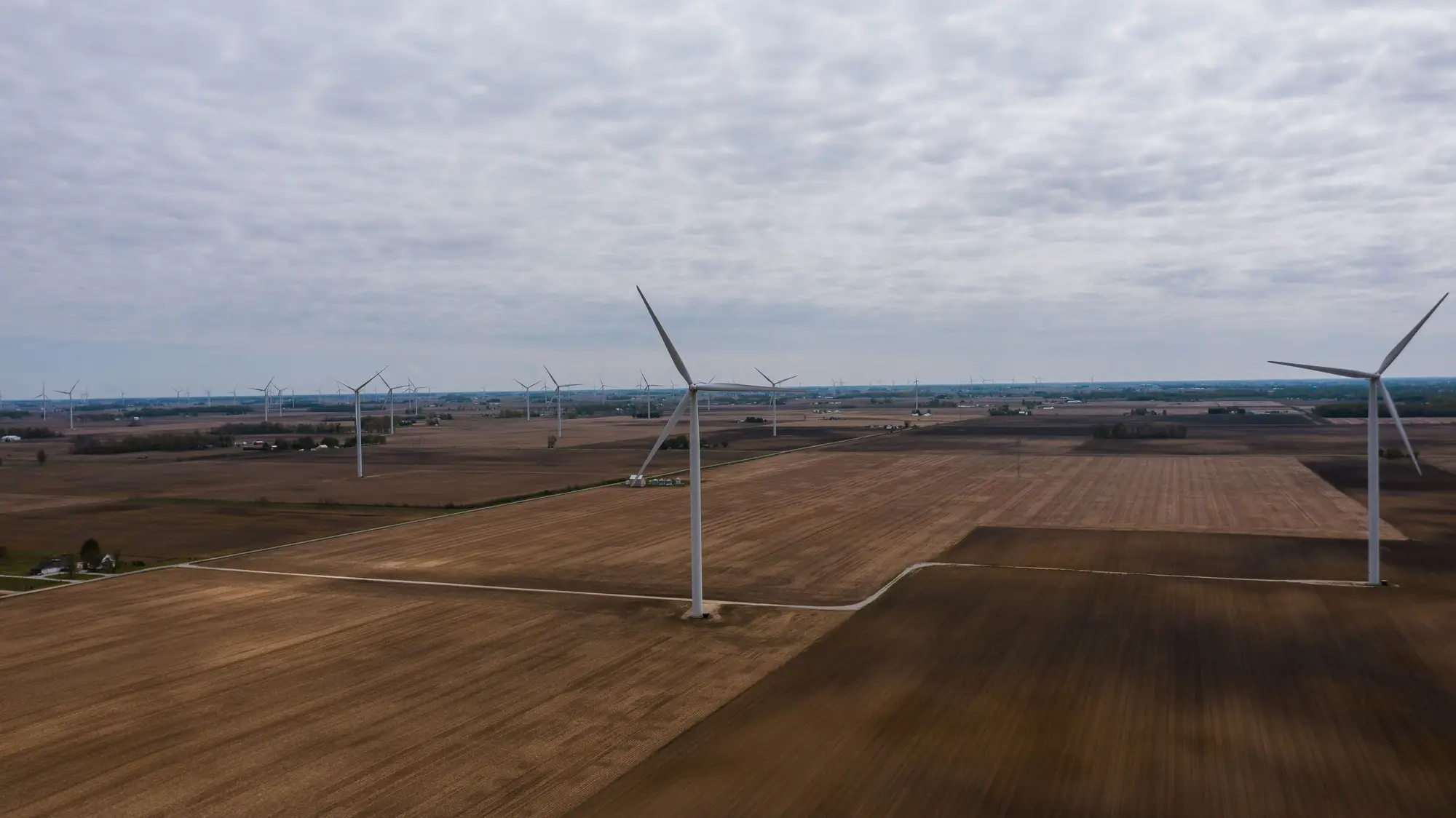
Pull the nameplate capacity for a competitor's project and you get one number. Build a wake-loss model off the layout and you often get a different one. Neither is wrong exactly, but they're answering different questions, and if you're reconciling a portfolio across a dozen sites, the gap between them adds up fast.
Nameplate capacity is a label, not a count
Nameplate capacity is the manufacturer's rated output per turbine, multiplied by however many units the filing says are installed. It's a useful shorthand for comparing projects at a glance, but it's assembled from paperwork, not from what's standing on the ground. A few things break it:
Repowering swaps out turbine models without every registry entry catching up, so the MW-per-unit figure quietly goes stale. Phased projects report the full build-out capacity before every phase is energized. Decommissioned units sometimes stay on the books for a filing cycle or two after they come down. And self-reported fleet lists, the kind utilities and developers submit voluntarily, lag actual commissioning by months in a lot of jurisdictions.
None of that is fraud. It's just the normal drift between a document and a construction schedule. But if you're doing portfolio capacity reconciliation across a region, that drift shows up as noise you can't explain.
Installed capacity vs. effective capacity
There's a second layer under the nameplate question, which is the difference between installed capacity and effective capacity. Installed capacity assumes every unit runs at its rated output. Effective capacity accounts for wake losses, curtailment, and the actual spacing between hubs, which is why a wind fleet capacity estimate used for siting or wake-loss studies needs turbine positions, not just a portfolio total.
You can't model wake interaction from a megawatt figure. You need the hub-to-hub distances, the row spacing, the orientation relative to prevailing wind. A nameplate total tells you the scale of a project. It tells you nothing about how the turbines sit relative to each other, which is the whole input to an effective-capacity calculation.
Where the two numbers actually diverge
In practice the gap shows up a few predictable ways. A project permitted for 60 turbines gets built in two phases, and the registry lists the full 60 while only 42 are erected and generating. A site gets repowered from 1.5 MW units to 3.2 MW units, and the old nameplate MW sticks around in a database that nobody's updated since the original COD filing. A neighboring developer's disclosure rounds a 47-turbine project to "about 50" because that's close enough for their own investor materials, and now your portfolio comp is off by three units you can't account for.
Any one of these is a minor discrepancy. Across a competitive landscape of twenty or thirty projects, they compound into a capacity estimate you can't fully trust without checking it against something independent of the filings.
Reconciling without waiting on the next disclosure cycle
The straightforward fix is to count what's actually standing. A turbine casts a shadow and sits on a pad with a recognizable footprint, and both are visible in current satellite or aerial imagery regardless of whether the operator has filed an update. That gives you a turbine-by-turbine tally you can set against the nameplate figure, phase by phase, project by project, without waiting for a registry refresh or an investor call.
That's the gap Wind Turbine Mapping is built for: it locates every turbine in an area of interest from rotor shadow and pad geometry and resolves each hub's position, delivered as a point layer refreshed quarterly, so a portfolio total can be checked against what's physically built rather than what's been reported.
Treat the nameplate number as the claim and the turbine count as the verification. If your next reconciliation needs an independent count rather than another disclosure to wait on, that's worth a look.